

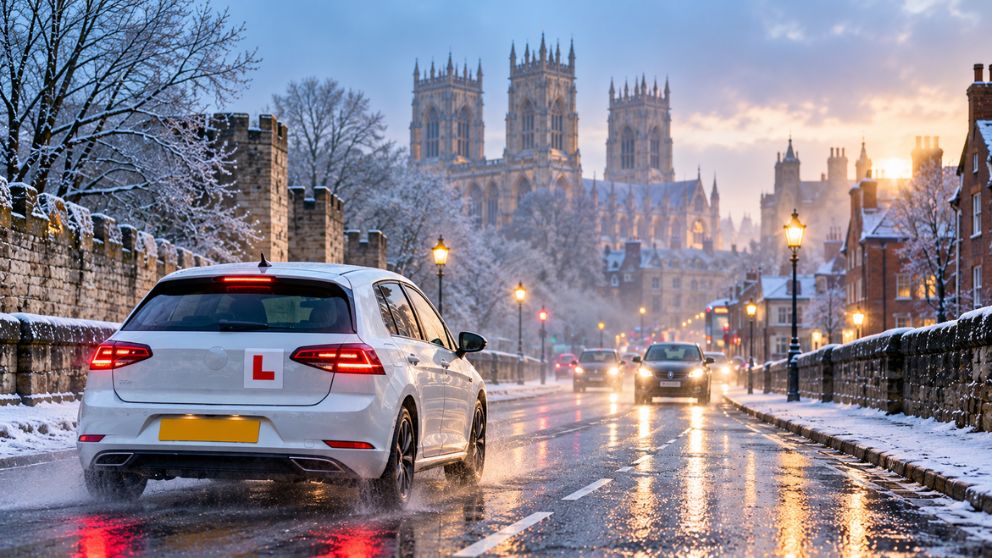
Winter driving in York can be challenging, particularly for learner drivers who are still building confidence behind the wheel. From heavy rainfall and early-morning fog to slippery roads and freezing temperatures, the colder months bring driving conditions that require extra care, patience, and preparation.
Whether you're navigating the busy streets of York city centre, driving along Fulford Road, or practising on quieter residential roads in Acomb, Clifton, Heworth, or Haxby, understanding how winter weather affects your vehicle is essential.
At Regal Driving School, we believe that learning to drive safely means being prepared for different road and weather conditions. That's why our experienced driving instructors help learners develop the observation, judgement, and vehicle-control skills needed to become confident drivers.
In this guide, we'll explore the most common winter driving challenges in York and share practical tips to help you stay safe during rain, fog, snow, and icy conditions.
York experiences a mixture of wet, cold, and occasionally freezing weather throughout the winter months. Even when snowfall is limited, drivers may encounter slippery roads, poor visibility, and difficult driving conditions.
Some of the main challenges include:
These conditions can be particularly challenging for beginners who are still learning how to control their vehicles and respond to unexpected hazards.
Understanding the risks is the first step towards becoming a safer winter driver.
Rain is one of the most common challenges drivers face during winter.
Roads around York, including Fulford Road, Holgate Road, Bootham, and Wigginton Road, carry a mixture of cars, buses, cyclists, and pedestrians. Wet weather can make driving more demanding, especially during busy commuting hours.
According to the Highway Code, stopping distances on wet roads are at least twice those required in dry conditions.
Reduce Your Speed
Even if you're driving within the speed limit, you may need to travel more slowly when roads are wet.
Adjust your speed according to visibility, traffic conditions, and the amount of grip available.
Increase Your Following Distance
Maintain at least a four-second gap in wet conditions on faster roads, and increase it further when necessary.
A larger gap gives you more time to react if the vehicle ahead brakes suddenly.
Use Your Headlights When Necessary
The Highway Code requires drivers to use headlights when visibility is seriously reduced, generally when they cannot see more than 100 metres ahead.
Dipped headlights help you see and be seen without dazzling other road users.
Avoid Sudden Braking
Brake smoothly and gradually whenever possible.
Harsh braking on slippery surfaces can reduce vehicle stability and increase the risk of losing control.
Be Careful Around Puddles
Large puddles can hide potholes, uneven road surfaces, and other hazards.
Never attempt to drive through floodwater. If the road is flooded, choose another safe route.
Aquaplaning occurs when a layer of water prevents your tyres from maintaining proper contact with the road surface.
This can cause the steering to feel unresponsive and reduce your control of the vehicle.
If you experience aquaplaning:
Learning how to recognise changing road conditions can help prevent dangerous situations.
Fog can develop during cold mornings and evenings, creating difficult driving conditions around York and its surrounding areas.
It may be particularly concerning for learner drivers because familiar roads can suddenly become difficult to navigate.
Fog also creates additional challenges when approaching junctions, roundabouts, pedestrian crossings, and bends.
Use Dipped Headlights
When visibility is seriously reduced, use dipped headlights to help other road users see your vehicle.
Avoid using full-beam headlights because the light can reflect off fog and make visibility worse.
Know When to Use Fog Lights
Under the Highway Code, front and rear fog lights must not be used unless visibility is seriously reduced.
This generally means visibility below 100 metres.
Remember to switch fog lights off when visibility improves because they can dazzle other drivers.
Slow Down Gradually
When approaching a foggy area, check your mirrors before reducing your speed.
Always drive slowly enough to stop within the distance you can clearly see ahead.
Keep a Safe Distance
Avoid following another vehicle too closely.
The rear lights of the vehicle ahead may provide a false sense of security, particularly if the driver suddenly brakes.
Use Windscreen Demisters
Cold weather can cause condensation to build up inside your vehicle.
Ensure your windscreen and windows are clear before driving.
Fog makes it more difficult to judge:
If visibility becomes too poor to continue safely, find a suitable safe place to stop rather than taking unnecessary risks.
One of the most dangerous winter driving hazards is black ice.
Black ice is a thin, often transparent layer of ice that can form on road surfaces. Because it may look similar to wet tarmac, drivers can struggle to recognise it.
It can be particularly hazardous during early mornings, late evenings, and overnight freezing conditions.
When temperatures fall, take additional care around:
Bridges and Exposed Roads
Bridges and elevated road surfaces can cool quickly, increasing the possibility of ice forming.
Shaded Residential Streets
Roads that receive little sunlight may remain slippery longer than exposed routes.
Quiet Neighbourhood Roads
Smaller roads may not receive the same priority for gritting as major routes.
Junctions and Bends
Icy conditions can make braking, turning, and changing direction considerably more difficult.
Learners in Acomb, Clifton, Haxby, Holgate, Fulford, and surrounding York neighbourhoods should be particularly careful when moving between different types of road.
1. Reduce Your Speed Significantly
Driving at the usual speed limit may be unsafe when roads are icy.
Always adjust your speed to the available grip.
2. Increase Your Stopping Distance
The Highway Code warns that stopping distances can be up to ten times greater on icy or snowy roads compared with dry conditions.
This means leaving substantially more space between your vehicle and the one ahead.
3. Accelerate and Brake Gently
Avoid harsh acceleration, sudden braking, and aggressive steering.
Smooth vehicle control is essential for maintaining traction.
4. Use Appropriate Gears
In a manual car, using a higher gear where appropriate can help reduce wheelspin.
Accelerate gently and avoid unnecessary changes in speed.
5. Take Extra Care on Bends
Reduce your speed before reaching a bend, then steer smoothly through it.
Sudden steering or braking during a turn can cause the vehicle to lose grip.
Important: If roads are dangerously icy, the safest decision is to avoid travelling unless your journey is essential.
During the winter months, City of York Council carries out road gritting and salting to help reduce the risk caused by snow, frost, and ice.
However, not every road receives the same level of treatment.
The council prioritises important routes and clears snow according to its winter maintenance procedures.
For example, a learner may travel along a relatively clear main road before turning into a quieter residential street where frost or ice remains.
This is why drivers should never assume that every road is safe simply because the previous road was clear.
You can check local gritting information on the City of York Council website.
York is located near the meeting point of the River Ouse and River Foss, making parts of the city vulnerable to flooding during periods of heavy or prolonged rainfall.
Flooding can affect road access, traffic flow, and journey times.
According to City of York Council's flood travel guidance, roads that may be affected during certain flood events include:
These are examples of roads identified in the council's flood planning information. They are not necessarily closed during every flood event.
Never Drive Through Floodwater
Even shallow-looking floodwater can hide serious hazards, including damaged road surfaces and strong currents.
Follow Official Road Closures
If a road is closed, follow the signed diversion rather than attempting to find a way through.
Plan Alternative Routes
Check local traffic updates before travelling, especially when flood warnings are in place.
Allow Additional Journey Time
Flood-related diversions may increase traffic on nearby roads.
For up-to-date information, check the City of York Council's flooding guidance and official Environment Agency flood warnings.
Before starting a journey, make sure your vehicle is properly prepared for winter conditions.
This is important for every driver, but particularly for learners practising essential driving skills.
Tyres
Check tyre pressure, tread depth, and overall condition. Worn tyres reduce grip, particularly on wet roads.
Lights
Ensure your headlights, brake lights, indicators, and fog lights are working correctly.
Windscreen Wipers
Replace damaged or worn wiper blades to maintain clear visibility during heavy rain.
Screenwash
Use a suitable screenwash mixture that provides protection against freezing.
Windows and Mirrors
Remove frost, snow, and condensation before moving the vehicle.
Battery
Cold weather can affect battery performance, particularly in older vehicles.
Emergency Supplies
For longer or essential winter journeys, consider carrying warm clothing, a torch, a phone charger, water, and basic emergency supplies.
Taking a few minutes to prepare your vehicle can make a significant difference to your safety.
Yes! Driving lessons can take place throughout winter when road and weather conditions are safe.
In fact, suitable winter lessons can provide valuable experience in handling rain, reduced daylight, and changing road conditions.
However, driving lessons should never continue in conditions that create an unacceptable safety risk.
Experience Different Weather Conditions
Learners can develop a better understanding of how rainfall, temperature, and visibility affect driving.
Improve Observation Skills
Winter driving encourages greater attention to hazards, traffic movements, and road conditions.
Build Confidence Behind the Wheel
With professional instruction, learners can improve their ability to make safe driving decisions in unfamiliar situations.
Develop Better Vehicle Control
Driving in suitable wet conditions helps learners practise smooth acceleration, braking, and steering.
At Regal Driving School, our experienced instructors provide personalised driving lessons designed to help learners develop confidence and safe driving habits throughout the year.
Yes. The Driver and Vehicle Standards Agency (DVSA) may cancel practical driving tests when weather conditions make it unsafe to continue.
This can happen during:
If severe weather affects York on your driving test day, contact your test centre using the telephone number on your booking confirmation.
If DVSA cancels your test because of bad weather, it will automatically arrange another appointment and send you the details.
You won't need to pay another test fee for a test cancelled by DVSA because of severe weather.
You can find more information on the official GOV.UK driving test cancellation page.
If your test goes ahead, remember to:
A practical driving test assesses your ability to drive safely and responsibly, including responding appropriately to the prevailing road conditions.
Whether you're learning to drive in Haxby, Heworth, Fulford, Clifton, Holgate, or Acomb, the following habits can help you improve your winter driving skills.
Anticipate traffic lights, junctions, pedestrian crossings, and other potential hazards early.
Smooth steering, braking, and acceleration become even more important when road grip is reduced.
Pedestrians and cyclists may be harder to see in poor weather, particularly during early mornings and evenings.
Remember that the speed limit is a maximum permitted speed, not a target. Conditions may require you to drive considerably more slowly.
If you encounter an unfamiliar road condition, focus on maintaining control and making safe decisions rather than reacting suddenly.
Your driving instructor can help you understand how weather conditions affect your driving and when it is safer to postpone a journey.
At Regal Driving School, we believe that becoming a confident driver involves more than learning to pass a practical test.
It means developing the knowledge, awareness, and judgement needed to drive safely in everyday situations.
Our professional driving instructors in York provide supportive, personalised training for learners of all experience levels.
We offer:
Our lessons help learners develop safe driving habits that are useful throughout the year, including during the colder winter months.
Yes, driving lessons can take place safely during winter when road and weather conditions are suitable. Learning in light rain or reduced daylight can help you gain valuable experience. However, lessons should be postponed when snow, ice, flooding, or poor visibility make driving unsafe.
According to the Highway Code, stopping distances can be up to ten times greater on icy or snowy roads than on dry roads. Drivers should slow down, maintain a much greater following distance, and avoid harsh braking.
Fog lights should only be used when visibility is seriously reduced, generally when you cannot see more than 100 metres ahead. You must switch them off when visibility improves to avoid dazzling other road users.
No. City of York Council prioritises certain roads for gritting during freezing conditions. Smaller residential streets and other areas may not receive the same treatment. Always remain cautious, even when driving on a road that has been gritted.
If DVSA cancels your practical driving test due to dangerous weather conditions, it will automatically arrange another test date. You won't need to pay another test fee for a weather-related DVSA cancellation.
Yes. Automatic driving lessons are suitable for beginners throughout the year, provided road conditions are safe. Learning in an automatic car allows you to concentrate on observation, steering, braking, and road awareness without managing manual gear changes.
Driving during winter requires additional care, patience, and awareness.
From heavy rainfall and early-morning fog to icy residential streets and flood-related road closures, York's winter conditions can present challenges for drivers of every experience level.
The key to staying safe is understanding how weather affects your vehicle, preparing properly before travelling, and adjusting your driving to the conditions.
For learner drivers, professional instruction can help develop the skills and confidence needed to handle these situations responsibly.
Whether you're a complete beginner, looking to improve your driving skills, or preparing for your practical driving test, Regal Driving School is here to help.
Our friendly, experienced instructors offer flexible manual, automatic, and intensive driving lessons tailored to your needs.
